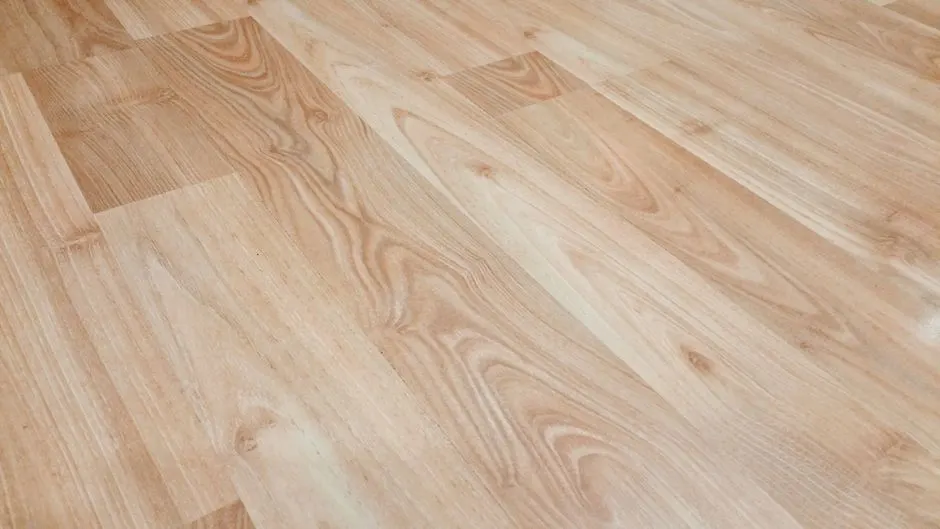
Your hardwood floor is cupping because moisture has reached the underside of the boards and made them swell along their bottom edges, pushing the center of each plank up into a cup shape. In Austin, that moisture almost always comes from the air - our average relative humidity sits between 65% and 85% for most of the year, and wood floors here absorb and release that moisture constantly. The fix depends on whether the cupping is still fresh or has been sitting for months, and we'll walk you through both below.
What Cupping Actually Is
Hardwood floor cupping is a moisture-driven distortion where the edges of each board sit higher than the center, giving the floor a washboard or crowned look when you run your hand across it. It is not a finish problem and it is not a manufacturing defect - it is the wood responding to a moisture imbalance between its top face and its bottom face.
Wood is hygroscopic, which means it takes on and gives off moisture with the air around it. When the bottom of a board picks up more moisture than the top, the bottom expands. The top stays the same size. The board has nowhere to go but up at the edges. That is cupping.
The opposite condition - crowning, where the center of the board is higher than the edges - usually happens after a floor has been sanded while it was still cupped. We see that a lot in older Austin homes where a previous contractor rushed a refinish.
Why Austin Humidity Causes Hardwood Floor Cupping
Austin humidity causes hardwood floor cupping because the air here holds far more moisture than most of Texas, and that moisture migrates into your subfloor and the underside of your boards. The numbers tell the story: Austin averages 68% relative humidity in the morning and often stays above 60% through the afternoon from April through October. In a typical summer, we see indoor humidity climb to 60-70% in homes that run the AC but never run a dehumidifier.
That is the key detail most homeowners miss. Air conditioning cools the air but does not remove enough moisture on its own. A 2,000-square-foot Austin home can pull 10 to 15 gallons of water out of the air every day during a wet spring, and a good chunk of that ends up in your floor system if the indoor humidity stays above 55%.
Solid oak and hickory boards move the most. A 5-inch-wide solid oak plank can expand and contract roughly 1/8 inch across its width between a dry winter and a humid summer. Multiply that across a 20-foot room and you have a floor that is trying to grow by more than half an inch - which is exactly why cupping shows up first along the walls and in hallways.
The Real Causes Behind Cupping in Austin Homes
Humidity is the headline, but it is rarely the only factor. Here are the specific sources we find when we pull up a cupped floor in Austin.
Elevated indoor humidity
Anything above 55% relative humidity for more than a few weeks starts to move solid wood. Homes without a whole-house dehumidifier, or with an undersized AC unit, are the most common culprits.
Moisture from below
Austin sits on heavy clay soil that holds water after every rain. If your slab does not have a proper vapor barrier, or if a pier-and-beam crawlspace has no ventilation, ground moisture wicks up into the subfloor and straight into your boards. We see this constantly in older neighborhoods like Wood Flooring in Zilker, where 1950s pier-and-beam homes were built before modern moisture control was standard.
Plumbing and appliance leaks
A slow drip under the kitchen sink, a leaking dishwasher supply line, or a toilet that has been seeping for months will cup the floor around it long before you see standing water. If the cupping is localized to one room, start looking for a leak.
Recent installation over a wet subfloor
If your floor was installed within the last 12 months and is cupping, the subfloor was likely too wet at install time. We test every subfloor with a moisture meter before we lay a single board - anything above 4% on a slab or 12% on wood subfloor means we wait.
Seasonal swings and HVAC changes
Austin goes from 30% humidity in January to 80% in May. Floors that were installed in a dry month and never acclimated properly will cup the first time a wet spring rolls through.
How to Fix Hardwood Floor Cupping in Austin Humidity
How you fix cupping depends entirely on how long it has been there. Fresh cupping - under 60 days - can often be reversed by fixing the moisture source and letting the floor dry. Long-term cupping usually needs sanding or board replacement.
Step 1: Find and stop the moisture source
This is non-negotiable. If you sand a cupped floor without fixing the moisture problem, it will cup again within a season. We check indoor humidity with a hygrometer, test the subfloor with a pin meter, and inspect for plumbing leaks before we touch the floor.
Step 2: Bring indoor humidity down to 45-50%
Run a dehumidifier sized for your square footage - a 70-pint unit for most Austin homes - and keep it running until the floor flattens. This can take 3 to 8 weeks depending on how long the cupping has been there.
Step 3: Wait and re-measure
We mark the worst boards with tape and check them every two weeks. If the edges come down, the floor is recovering. If they do not move after 60 days, the wood has taken a permanent set and will need mechanical repair.
Step 4: Sand or replace
For floors that have taken a permanent set, we sand the cupped surface flat and refinish. If individual boards are too far gone, we replace them. This is where our wood floor repair Austin TX team does most of its work - matching new boards to a 20-year-old floor is a skill, not a guess.
How to Prevent Hardwood Floor Cupping in Austin Texas
Prevention in Austin comes down to controlling moisture year-round, not just in the wet months. Here is what actually works.
- Keep indoor humidity between 40% and 50%. A $200 dehumidifier is cheaper than a $4,000 floor replacement.
- Run your AC fan on "auto," not "on." Continuous fan mode pulls humid air across the coil and back into the house.
- Check under sinks and behind appliances twice a year. A $3 supply line can cup 200 square feet of floor.
- Ventilate pier-and-beam crawlspaces. Add foundation vents if yours has fewer than one per 150 square feet of floor area.
- Acclimate new flooring for 5 to 7 days before installation, and test the subfloor moisture first.
If you are planning a new floor and want it done right the first time, our hardwood floor installation Austin TX crew tests subfloor moisture on every job and documents it before we start.
Common Mistakes We See Homeowners Make
We get called to fix cupping that has been made worse by one of these four mistakes. Avoid them.
- Sanding a floor that is still cupped. If you sand the tops flat while the bottoms are still swollen, the floor will crown the moment it dries. We have seen this turn a $1,200 repair into a $6,000 full replacement.
- Turning the AC way down to "dry it out." Dropping the thermostat to 65°F does not lower humidity - it just makes the AC cycle less and the air stay wetter.
- Ignoring a small area. Cupping that starts in a 3-foot patch near the dishwasher will spread across the whole room within 6 to 8 weeks if the leak is not fixed.
- Using a floor sealer as a fix. Surface sealers trap moisture in the board and make cupping worse. The moisture has to come out, not be sealed in.
When to Call a Professional
Call a professional when the cupping has been visible for more than 60 days, when it covers more than 20 square feet, or when you cannot find the moisture source on your own. Those three conditions usually mean the wood has taken a permanent set and will not flatten on its own.
We handle this every week across Austin. Our team brings moisture meters, thermal imaging, and a plan - we find the source, fix the floor, and test it before we leave. If you are in a newer build out west, we also work regularly on Wood Flooring in Circle C, where slab-on-grade construction and tight building envelopes create their own humidity quirks.
If you want a floor that holds up to Austin's climate from day one, our Wood Flooring Austin TX team installs, repairs, and refinishes with moisture control built into every step.
Frequently Asked Questions
Why is my hardwood floor cupping in Austin humidity?
Your floor is cupping because the underside of the boards has absorbed more moisture than the top, causing the edges to swell upward. Austin's 65-85% average humidity pushes moisture into the subfloor and board bottoms, especially in homes without a dehumidifier or with a slab that lacks a vapor barrier.
How do you fix cupping hardwood floors in Austin TX?
First, find and stop the moisture source. Then bring indoor humidity down to 45-50% and wait 4 to 8 weeks for the boards to dry. If the floor does not flatten after 60 days, we sand it flat and refinish, or replace the worst boards. Most repairs run $500 to $2,500 depending on square footage.
Can cupped wood floors be repaired in Austin Texas?
Yes, in almost every case. Fresh cupping under 60 days old usually reverses on its own once humidity is controlled. Older cupping that has taken a permanent set can be sanded flat and refinished, or individual boards can be replaced. Full replacement is rarely necessary.
Does Austin humidity cause hardwood floor cupping?
Yes. Austin's relative humidity averages 68% in the morning and stays above 60% for most of the year. Solid wood floors absorb that moisture through the subfloor and the board undersides, which is the single most common cause of cupping we see in this city.
How long does it take for a cupped floor to flatten?
If the moisture source is fixed and indoor humidity stays at 45-50%, most floors flatten within 4 to 8 weeks. Floors that have been cupped for more than 6 months usually will not flatten on their own and need sanding or board replacement.
Get Help with Wood Flooring in Austin
Cupping does not fix itself, and every week you wait makes the repair more expensive. Call General Wood Flooring LLC at 512 877 7960 and we will find the moisture source, flatten your floor, and get it looking right again.