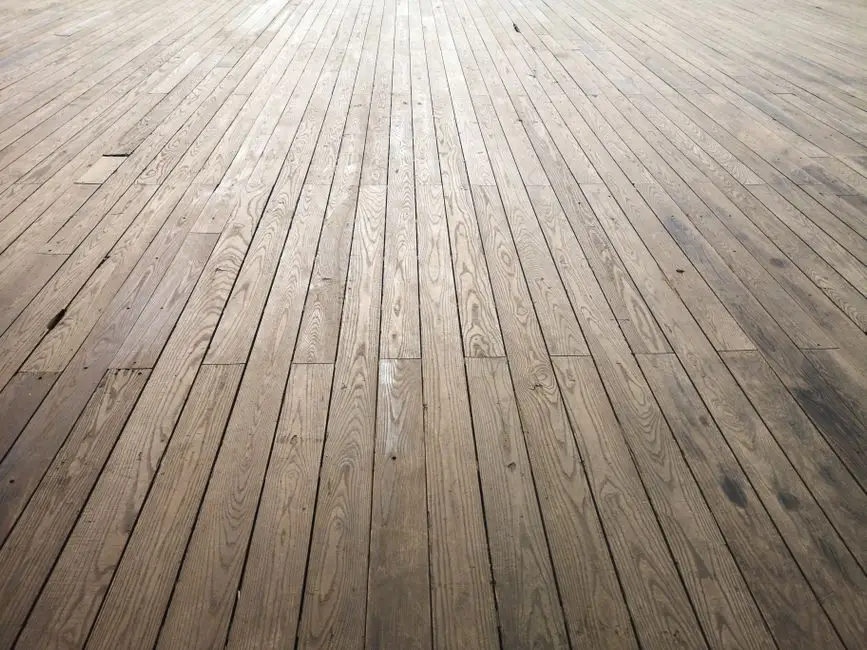
For most Austin homes, engineered hardwood is the better choice - it handles our 60-90% humidity swings without the gapping and cupping that solid oak develops over a few seasons. Solid hardwood still wins in a few specific situations: pier-and-beam houses with stable indoor humidity, homeowners who want three or four full sand-and-refinish cycles over 50+ years, and anyone chasing that specific solid-oak sound underfoot.
Engineered vs solid hardwood Austin homeowners ask about is really a question about Central Texas climate, foundation type, and budget. We install both across the metro, and the right answer changes block by block. Here's how each one actually performs in Austin, what 2026 pricing looks like, and how to pick without regretting it in year three.
What is the difference between engineered and solid hardwood?
Engineered hardwood is a real wood floor made of a thin wear layer of hardwood bonded to a plywood core, usually 3 to 9 plies thick, that resists moisture movement far better than a single solid plank. Solid hardwood is one piece of milled wood, typically 3/4 inch thick, that expands and contracts as a single unit with every humidity change.
That structural difference drives everything else. A solid 3/4-inch oak plank in an Austin living room can move 1/8 inch or more across its width between a wet May and a dry January. An engineered plank with a cross-ply core moves a fraction of that because the layers pull against each other.
Both are real wood. Both can be sanded and refinished. The difference is how much they move, how thick the wear layer is, and how they're installed.
- Solid: one piece of wood, 3/4 inch typical, nailed or stapled to a wood subfloor, 3-5 refinishes over its life.
- Engineered: plywood core with a 2-6 mm hardwood wear layer, glued, floated, or stapled, 1-3 refinishes depending on wear layer thickness.
How does Austin humidity affect engineered vs solid hardwood?
Austin humidity is the single biggest reason engineered hardwood outsells solid in this market. Our average outdoor relative humidity runs 65-75% most of the year, and indoor swings between 35% in a heated February and 65% in a rainy October are normal without a whole-home dehumidifier.
Wood moves with moisture. Solid planks take on water vapor through all six sides and swell across the grain. In a dry winter they shrink and you get gaps between boards. In a wet spring they swell and you get cupping - edges higher than the center. We see this every year in older homes across Wood Flooring in Zilker, where 1950s pier-and-beam construction breathes with the seasons and no amount of acclimation stops a solid oak floor from moving.
Engineered planks handle the same swings with less drama because the cross-ply core resists dimensional change. A 5-inch engineered white oak plank might move 1/32 inch across its width over the same humidity range that moves a solid plank 1/8 inch. That's the difference between a floor that looks tight in year five and one that looks like a washboard.
Two things matter more than the engineered-vs-solid label:
- Acclimate the wood on site for 5-7 days before installation. We bring material into the house, stack it with spacers, and let it sit at the home's actual indoor humidity.
- Keep indoor humidity between 35% and 55%. A $200 dehumidifier in the summer and a $150 humidifier in winter will do more for your floor's lifespan than any upgrade in material.
Slab-on-grade homes - most of what's been built in Austin since the 1980s - are a different story. Concrete wicks moisture up from the soil, and solid hardwood nailed to a slab is a non-starter. You either build a plywood subfloor over a vapor barrier, or you go engineered and glue it down. That's why so many newer builds in Wood Flooring in Circle C and similar subdivisions end up with engineered floors by default.
Which is better for Austin homes: engineered or solid hardwood?
Engineered hardwood is better for most Austin homes because it tolerates our humidity swings, works over concrete slabs, and costs less to install. Solid hardwood is better when you have a stable pier-and-beam house, want maximum refinish life, and don't mind managing indoor humidity year-round.
Here's how we break it down on a first walkthrough:
- Slab foundation: engineered, glued down over a moisture barrier. Solid is off the table unless you build up a subfloor.
- Pier-and-beam with good ventilation: either works. Solid is a legitimate choice if the homeowner will run a dehumidifier.
- Radiant heat or a sunroom: engineered only. Solid will gap and cup.
- Rental or short-hold property: engineered. Cheaper to install, more forgiving, easier to repair a single plank.
- Forever home with a specific oak or hickory look: solid, if the foundation and humidity cooperate.
We install both. If you want a straight recommendation, call us with your foundation type and we'll tell you in five minutes which one makes sense. Our hardwood floor installation Austin TX team handles solid and engineered side by side every week, so we're not steering you toward one because it's what we stock.
What about the sound and feel?
Solid hardwood sounds different underfoot - a lower, more resonant thud. Engineered over a glued-down slab sounds tighter and slightly more hollow. If you've lived on solid oak and loved it, engineered will feel 90% the same. If you've never had wood floors, you won't notice.
Engineered vs solid hardwood cost in Austin TX
Typical 2026 pricing in Austin runs $8-$14 per square foot installed for engineered hardwood and $10-$18 per square foot installed for solid hardwood, materials and labor combined. The gap comes from material cost, subfloor prep, and the extra labor solid requires.
Here's what actually drives the number:
- Engineered material: $4-$9/sq ft for a 2-4 mm wear layer, $9-$14/sq ft for a 4-6 mm premium wear layer.
- Solid material: $5-$11/sq ft for domestic oak or hickory, $12-$20+ for exotic species.
- Installation labor: $3-$6/sq ft for nail-down or staple-down, $4-$8/sq ft for glue-down over concrete.
- Subfloor prep: $1-$4/sq ft if we need to level, add a vapor barrier, or build up over a slab.
- Removal of old flooring: $1-$3/sq ft for carpet or laminate, more for tile.
A 1,200 sq ft downstairs in a typical Austin home lands around $11,000-$14,000 for engineered and $14,000-$19,000 for solid, all-in, in 2026 dollars. Refinishing an existing floor instead of replacing it runs $3-$5/sq ft - a fraction of new install cost if the existing wood is in decent shape.
One thing that surprises homeowners: engineered is not always cheaper. A wide-plank European white oak engineered floor with a 6 mm wear layer can cost more per square foot than a standard 2-1/4 inch solid red oak. You're paying for the look and the wear layer, not the category.
Which hardwood lasts longer in Austin Texas?
Solid hardwood lasts longer in Austin if it's installed over a properly ventilated pier-and-beam foundation and the homeowner controls indoor humidity. Engineered lasts longer over a concrete slab, where solid wood would fail within a few seasons.
Refinish life is the real measure. A 3/4-inch solid oak floor can be sanded and refinished 3-5 times over 50-70 years. An engineered floor with a 4 mm wear layer can be refinished 2-3 times, roughly 30-40 years. A thin 2 mm engineered floor is a one-refinish product - 15-20 years and it's done.
In practice, we see solid floors in Austin fail early for one reason: moisture. A pier-and-beam house with a blocked foundation vent, a slow plumbing leak, or a homeowner who runs the AC at 68°F all summer and never thinks about humidity will cup a solid floor in two seasons. Engineered tolerates the same abuse better.
So the honest answer is: solid lasts longer in the right house, engineered lasts longer in the wrong one. Most Austin houses are the wrong one for solid.
Common mistakes we see with Austin hardwood projects
The most expensive mistake is skipping acclimation. We've pulled up six-month-old floors that gapped because the installer went from truck to nail gun in one day. Wood needs 5-7 days inside the house at the home's real humidity before it goes down.
Other repeat offenders:
- No moisture test on the slab. Concrete in Austin can read 4-6% moisture content even in a dry month. Glue-down over a wet slab fails. We test every slab before we quote.
- Cheap underlayment over concrete. A $0.30/sq ft foam pad under engineered over a slab will trap moisture and delaminate the planks. Use the manufacturer's specified adhesive or a proper vapor barrier.
- Installing solid over a slab anyway. We get called to fix this two or three times a year. It never works.
- Ignoring the transition to tile or carpet. A 3/4-inch solid floor sits higher than engineered. If you're matching an existing floor height, that 1/4-inch difference matters at every doorway.
- Buying on price alone from a big-box SKU. A $3.99/sq ft engineered floor with a 1 mm wear layer is a 10-year floor. Know what you're buying.
If your existing floor is gapping, cupping, or squeaking, it may not need replacement. We handle wood floor repair Austin TX for everything from single-plank swaps to full board replacement, and we'll tell you honestly if refinishing is the better spend.
When to call a professional
Call us when you're choosing between engineered and solid and want a straight answer based on your foundation, not a sales pitch. We walk the house, check the slab or crawlspace, test moisture, and tell you what will actually hold up.
We also get the call when a DIY install has gone sideways - planks lifting at the seams, gaps opening in month two, or a floor that sounds hollow because it wasn't glued properly. General Wood Flooring LLC handles the diagnosis and the fix, and we can usually tell you what went wrong in the first ten minutes.
If you're refinishing rather than replacing, our dustless sanding and refinishing Austin TX service keeps the dust out of your kitchen and your HVAC system. Most 1,000-1,500 sq ft refinish jobs are done in 3-4 days, including cure time.
Frequently Asked Questions
Is engineered or solid hardwood better for Austin TX homes?
Engineered is better for most Austin homes because it handles 60-90% humidity swings and works over concrete slabs. Solid is better only on well-ventilated pier-and-beam foundations where you'll manage indoor humidity between 35% and 55% year-round.
How does Austin humidity affect engineered vs solid hardwood?
Solid planks can move 1/8 inch or more across their width between a wet spring and a dry winter, causing gapping and cupping. Engineered planks with a cross-ply core move a fraction of that - typically 1/32 inch over the same range - so they stay tight.
What is the cost difference between engineered and solid hardwood in Austin?
In 2026, engineered runs $8-$14 per square foot installed and solid runs $10-$18. On a 1,200 sq ft downstairs, that's roughly $11,000-$14,000 for engineered versus $14,000-$19,000 for solid, materials and labor included.
Which hardwood lasts longer in Austin Texas?
Solid lasts longer in the right house - 3-5 refinishes over 50-70 years on a stable pier-and-beam foundation. Engineered lasts longer over concrete slabs, where solid wood fails within a few seasons. Match the material to your foundation first.
Can I install solid hardwood over a concrete slab in Austin?
No. Concrete wicks moisture and solid wood will cup, gap, and eventually buckle. You either build a plywood subfloor over a vapor barrier or choose engineered hardwood, which glues down directly to a properly prepped slab.
Get help with Wood Flooring in Austin
Whether you land on engineered or solid, the install is what determines whether the floor looks good in year five. We've been putting down wood floors across Austin long enough to know which products survive our climate and which ones come back to haunt you.
Call General Wood Flooring LLC at 512 877 7960 for a walkthrough and a straight recommendation on your home. We'll tell you what we'd put in our own house.